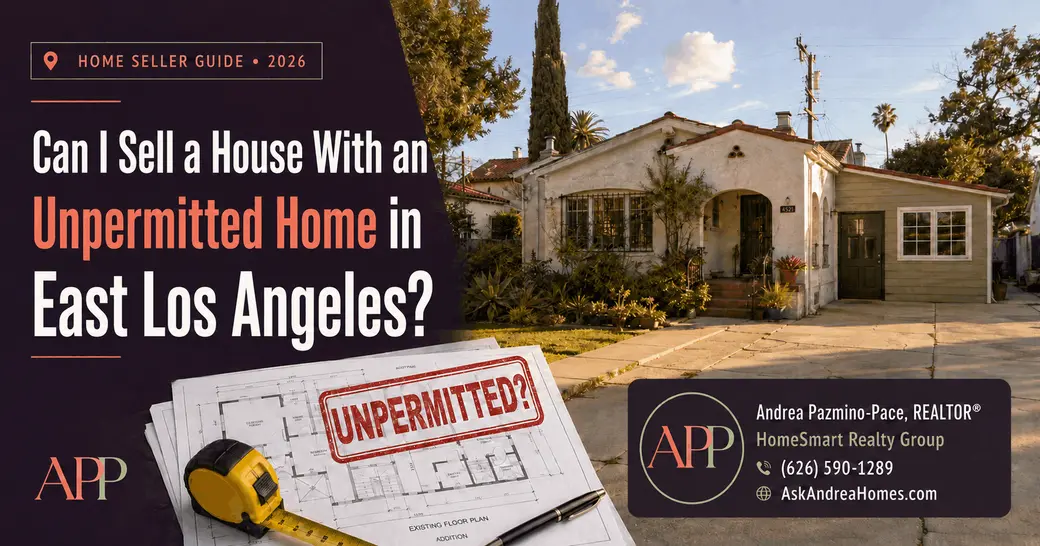
Can I Sell a House With an Unpermitted Home in East Los Angeles?
By Andrea Pazmino-Pace, REALTOR® | HomeSmart Realty Group
Updated August 2026
Quick Answer
Yes, you can sell a house with unpermitted construction, an unpermitted addition, or an unpermitted dwelling in East Los Angeles. However, known permit problems should be disclosed to the buyer, and the condition may affect financing, insurance, appraisal, inspections, and the final selling price.
Depending on the property, a homeowner may legalize the construction, remove it, restore its original use, or sell the property in its current condition.
What Does “Unpermitted Home” Mean?
An “unpermitted home” usually refers to a house containing construction or living space that was created without the required permits and final inspections.
In East Los Angeles, common examples include:
-
A garage converted into living space
-
An unpermitted backyard house
-
An ADU built without County approval
-
A second unit with a kitchen and bathroom
-
A room addition without permits
-
An enclosed patio used as a bedroom
-
A bathroom added without approval
-
A permitted project that never passed its final inspection
-
Electrical, plumbing or structural work completed without permits
Some properties may have been modified many years ago by a previous owner. Even if you did not complete the work, you should investigate what is currently known about the property before listing it for sale.
Which Agency Handles Permits in East Los Angeles?
East Los Angeles is an unincorporated Los Angeles County community. It is generally served by Los Angeles County Public Works Building and Safety and Los Angeles County Planning.
This is an important GEO distinction. East Los Angeles does not use the same permitting department as nearby Boyle Heights, El Sereno or Lincoln Heights, which are within the City of Los Angeles.
Los Angeles County handles:
-
Building permits
-
Plan reviews
-
Property inspections
-
Zoning applications
-
Code enforcement
-
Unpermitted construction complaints
-
Property rehabilitation cases
Owners can research zoning through the County’s Z-NET system and use EPIC-LA for certain permit applications, plan reviews and inspections.
Can You Legally Sell an East Los Angeles House With Unpermitted Work?
A property does not automatically become impossible to sell because it has unpermitted construction. Homes with garage conversions, additions and undocumented improvements are sold throughout Los Angeles County.
The larger questions are:
-
What construction was completed?
-
Is the work safe?
-
Is the current use allowed by zoning?
-
Are there open violations?
-
Can the buyer obtain financing?
-
Will an insurance company cover the property?
-
Was the condition properly disclosed?
-
How much will the buyer pay given the risk?
A small unpermitted bathroom may create different concerns than an entire second dwelling with structural, electrical and plumbing work.
Must the Seller Disclose Unpermitted Construction?
California sellers generally must disclose known material conditions that could affect a buyer’s decision, the property’s value or its desirability.
Unpermitted additions, garage conversions, code violations and unfinished permits may be material facts. These conditions may be addressed through the seller’s disclosure documents and additional written explanations.
A seller should not advertise an unpermitted garage conversion as a legal bedroom, permitted ADU or approved living area unless official records support that statement.
If the seller does not know when the work was completed, who completed it or whether permits were obtained, the seller should avoid guessing. The known facts and uncertainty should be explained accurately.
Additional disclosure for some recent resales
California has additional disclosure requirements for certain sellers who accept an offer within 18 months after obtaining title to a single-family property. The rule applies to specified additions, structural modifications, alterations and repairs performed by contractors after the seller acquired the property.
Owners who recently purchased, remodeled and are now reselling a house should speak with their real estate professional and, when appropriate, a California real estate attorney.
Can You Sell the Property “As Is”?
Yes. An East Los Angeles homeowner may list the property in its current condition.
However, selling as is does not remove the seller’s disclosure responsibilities. It generally means the seller does not promise in advance to make repairs.
The buyer may still:
-
Complete a home inspection
-
Research building permits
-
Review zoning
-
Obtain insurance quotes
-
Request specialized inspections
-
Ask for repairs or seller credits
-
Renegotiate the price
-
Cancel under an applicable contingency
The buyer and seller may negotiate responsibility for future corrections, but a private agreement does not prevent Los Angeles County from enforcing building and zoning rules.
How Can Unpermitted Work Affect the Sale?
1. Mortgage financing
A lender may ask questions when an appraisal or inspection identifies an unpermitted addition or separate dwelling.
Financing may become more difficult when the condition involves:
-
Health or safety concerns
-
Incomplete electrical work
-
Improper plumbing
-
Structural modifications
-
An illegal second unit
-
A kitchen or bathroom in a converted garage
-
A property use that conflicts with zoning
The lender could require documentation, repairs or corrections before approving the loan.
2. Appraised value
An appraiser may describe unpermitted space separately from the home’s recognized living area. The appraiser may not give it the same value as permitted square footage.
A 400-square-foot garage conversion does not automatically add 400 square feet to the legal living area shown in public records.
3. Homeowners insurance
An insurance company may request information about an unpermitted addition, electrical system, roof, plumbing or second dwelling. Some carriers may exclude the improvement, require corrections or decline to insure the property.
Buyers should begin researching insurance early instead of waiting until the final days of escrow.
4. Buyer confidence
Uncertainty can make buyers more cautious. They may worry about future permit expenses, County enforcement, construction corrections and resale difficulties.
Clear records and honest disclosures can help buyers evaluate the property more confidently.
5. Selling price
Buyers may reduce their offers to account for:
-
Permit and plan expenses
-
Contractor costs
-
Possible demolition
-
Engineering reports
-
Delays
-
Financing limitations
-
Insurance concerns
-
Future resale risk
The reduction may be larger when the unpermitted space is a major part of the property.
Should You Legalize the Work Before Selling?
Legalization may expand the buyer pool and reduce uncertainty, but it is not always the best financial decision.
The process may involve:
-
Researching existing permits
-
Confirming zoning
-
Hiring a licensed contractor or design professional
-
Preparing plans of the existing construction
-
Applying for County permits
-
Opening walls or ceilings for inspection
-
Correcting electrical, plumbing or structural work
-
Completing all required inspections
-
Receiving final approval
Legalization is not guaranteed. Setbacks, parking, fire access, ceiling height, lot coverage, structural safety and the property’s zoning can affect approval.
Before beginning, compare the estimated cost, timeline and probable increase in sale value.
What If the Unpermitted Space Is an ADU?
California has expanded the ability of homeowners to build accessory dwelling units, but an existing unpermitted unit does not become legal automatically.
The County may need to determine whether the structure can qualify as an ADU under current rules. Safety corrections, plans, permits and inspections may still be required.
Questions to investigate include:
-
Is the unit allowed under the property’s zoning?
-
Does it meet setback requirements?
-
Is there safe access?
-
Were electrical and plumbing systems installed correctly?
-
Does it have adequate emergency exits?
-
Is the structure located within an easement?
-
Can the existing foundation support the unit?
-
Is the garage conversion eligible for approval?
Do not market the space as a legal ADU until its status has been confirmed.
What Are Your Options as a Seller?
Option 1: Legalize the construction
This may improve marketability and financing options. It may also require months of work and significant expenses.
Option 2: Remove the unpermitted improvement
Restoring a garage or removing an addition may be more practical when legalization is unlikely.
Option 3: Sell the house in its current condition
You may disclose the condition and allow the buyer to complete independent investigations.
Option 4: Adjust the listing price
The price can reflect the buyer’s expected expenses and risk.
Option 5: Consider cash or renovation buyers
Cash buyers may face fewer lender requirements, but they often expect a discount for accepting unresolved permit issues.
Seven Steps to Take Before Listing
1. Confirm the jurisdiction
Verify that the property is located in unincorporated East Los Angeles and identify the correct County departments.
2. Research the permit history
Compare official records with the property’s current layout. Check for permits that were issued but never finalized.
3. Review zoning
A building permit and zoning approval are not the same. Confirm whether the current structure and use are allowed.
4. Gather all available records
Locate contracts, invoices, plans, inspection reports, permits, correction notices and communications with the County.
5. Obtain professional estimates
Speak with qualified contractors, architects, engineers or permit professionals when appropriate.
6. Compare selling options
Estimate the probable cost and timeline of legalization, removal and an as-is sale.
7. Prepare complete disclosures
Describe what is known without minimizing the condition or presenting undocumented space as legally permitted.
Frequently Asked Questions
Can a buyer obtain a loan on a house with an unpermitted addition?
Possibly. The decision depends on the addition, safety concerns, appraisal and lender guidelines. Major structural work or an illegal dwelling may create more difficulty than a minor improvement.
Will unpermitted work prevent escrow from closing?
Not automatically. However, the lender, appraiser, insurer or buyer could require additional information or corrections before closing.
Does title insurance identify unpermitted work?
A title report generally focuses on recorded ownership, liens and easements. It does not replace a permit search, zoning investigation or physical inspection.
Does unpermitted construction automatically create a lien?
No. Unpermitted work does not automatically create a lien. Open enforcement cases, fines or recorded matters may create separate concerns.
Can the buyer agree to handle the permits after closing?
The parties may negotiate certain responsibilities, but the buyer should understand the costs and risks. Los Angeles County may still enforce applicable building and zoning requirements.
Can I count unpermitted space in the home’s square footage?
It should not be represented as legally permitted living area unless supporting records confirm that status. The space can be described carefully with a clear explanation of its permit status.
Should I contact the County before listing?
That depends on the property and your strategy. Contacting the County may provide useful information, but it could also reveal required corrections or enforcement issues. Consider speaking with qualified professionals before deciding how to proceed.
Final Answer
You can sell a house with an unpermitted home, addition, garage conversion or ADU in East Los Angeles. The property’s marketability will depend on the type of construction, zoning, safety, County records, buyer financing and the quality of the disclosures.
The best choice may be to legalize the work, remove it or sell the property in its current condition. Review the facts before spending money or placing the home on the market.
Are You Considering Selling a Property With Unpermitted Work?
I help East Los Angeles homeowners review their selling options, prepare their homes for the market and create a strategy based on the property’s actual condition.
Andrea Pazmino-Pace, REALTOR®
HomeSmart Realty Group
Phone: (626) 590-1289
Website: AskAndreaHomes.com
This article provides general real estate information and is not legal, tax, engineering or building-code advice. Property circumstances and regulations vary. Consult Los Angeles County and qualified professionals for guidance concerning a specific property.
#EastLosAngelesRealEstate #EastLAHomes #LosAngelesHomeSeller #UnpermittedWork #SellMyHouse #LosAngelesCountyRealEstate #CaliforniaRealEstate #HomeSellingTips #AndreaPazminoPace #AskAndreaHomes
Categories
- All Blogs (182)
- Accessory Dwelling Units (2)
- Accessory Dwelling Units (ADUs) (1)
- ADUs & Home Improvement (102)
- ADUs and Property Improvements (3)
- agregar a alguien en el titulo de la casa (2)
- Albaceas y Administradores (1)
- Apelaciones de Impuestos (1)
- Appeal property taxes in Los Angeles County (1)
- Baldwin Park (2)
- Baldwin Park News (2)
- Baldwin Park property taxes (1)
- Baldwin Park Real Estate (9)
- Baldwin Park Real Estate Market (2)
- Beneficios Fiscales para Propietarios (1)
- Bienes Raíces (4)
- Bienes Raíces de Baldwin Park (1)
- Bienes Raíces de Sucesiones en Los Ángeles (1)
- Bienes Raíces del Condado de Los Ángeles (1)
- Bienes Raíces en Baldwin Park (2)
- Bienes Raíces en Boyle Heights (1)
- Bienes Raíces en California (4)
- Bienes Raíces en East Los Ángeles (3)
- Bienes Raíces en el Condado de Los Ángeles (3)
- Bienes Raíces en el Este de Los Ángeles (1)
- Bienes Raíces en El Monte (1)
- Bienes Raíces en el Sur de California (4)
- Bienes Raíces en Los Ángeles (2)
- bienes y raices en compton (2)
- Bienes y Raices en El Este de Los Angeles (1)
- bienes y raices ideas para vender (2)
- Bienes y Raices in Compton (1)
- bienes y raices in downey ca (1)
- Boyle Heights first-time homebuyer (1)
- Boyle Heights home prices, (1)
- Boyle Heights Mercado Inmobiliario (1)
- Boyle Heights Precios de la Vivienda (1)
- Boyle Heights Primeros Compradores (1)
- Boyle Heights real estate market (1)
- Boyle Heights zoning (2)
- Building Permits (1)
- Buyer Resources (102)
- Buying a Home (3)
- Buying a Home in Baldwin Park (1)
- buying a home in Boyle Heights 2026 (1)
- california bienes y raices (2)
- California Homeowners (3)
- California Homeowners Insurance (1)
- California Probate (1)
- California Property Taxes (1)
- california real estate (2)
- California Real Estate Laws (1)
- California Real Estate Taxes (1)
- Capital Gains Tax (1)
- Challenge assessed home value (1)
- Closing Costs (1)
- Code Enforcement (1)
- comision del agente (1)
- Community Development (1)
- como comprar casa (1)
- como poner una oferta de compra (1)
- Comparative Market Analysis (1)
- Compra de Casas (3)
- Compra de Vivienda (1)
- Compra de Viviendas (2)
- Compradores de Primera Vivienda (1)
- Compradores de Viviendas (1)
- Comprar casa en L.A. (1)
- Compton Real estate (1)
- Comunidades Cercanas al Transporte (1)
- Consejos de Bienes Raíces (1)
- Consejos para Propietarios (1)
- Consejos para Vendedores (1)
- Construcción de ADU (1)
- Construcciones Sin Permisos (1)
- Conversiones de Garaje (2)
- Costo de venta de una casa en LA (3)
- costos al vender su casa (1)
- costos de cierre (1)
- costos de escrow (1)
- costos de venta de casa (1)
- costos de venta de casa en ca (2)
- Cumplimiento de Códigos (1)
- Decline-in-Value Review (1)
- Desarrollo Urbano (1)
- Divulgaciones de la Propiedad (1)
- downey home selling (1)
- Downey market update (1)
- downey real estate (1)
- East Los Angeles (2)
- East Los Angeles Real Estate (6)
- Eastside Los Angeles Real Estate (1)
- Educación Inmobiliaria (8)
- Educación sobre Seguros (1)
- El Monte Real Estate (3)
- El Sereno Bienes Y Raices (1)
- El Sereno Mercado Inmobiliario (1)
- El Sereno Precio de Las Casas (1)
- El Sereno Priemeros-Compradores (1)
- Escrow Fees (1)
- Estate Administration (1)
- Executors and Administrators (1)
- Financing & Mortgages (98)
- first time home buyers (1)
- first-time home buyer (4)
- First-Time Home Buyer Guide (1)
- First-Time Home Buyers (2)
- Foreclosure & Distressed Sales (100)
- Garage Conversions (2)
- Gentrificación y Desarrollo (1)
- Gentrification and Development (1)
- get your offer accepted (1)
- Gravámenes de Contratistas (1)
- Gravámenes sobre Propiedades (1)
- guia para compradores (1)
- Guía para Compradores Primerizos (1)
- Guías de Vecindarios (2)
- Guías del Mercado Local (1)
- Guías para Vender Casa (1)
- Hipoteca y Financiamiento (1)
- Home Buying (1)
- home buying process (2)
- Home Improvement (1)
- home loans (1)
- Home Maintenance (1)
- home offers (1)
- Home Price Trends (1)
- Home Prices & Market Trends (2)
- Home Pricing (1)
- Home Seller Resources (3)
- Home Selling (4)
- home selling cost (1)
- Home Selling Costs (2)
- Home Selling Timeline (1)
- Home Value (2)
- Home Values (2)
- Homeowner Resources (3)
- Homeowner Tips (3)
- Homeowners (2)
- Homeowners Insurance (99)
- Housing Market (1)
- How Much House Can I Afford? (2)
- how to place an offer in a home (1)
- how to purchase a home (1)
- Impuesto sobre Ganancias de Capital (1)
- Impuestos sobre la Propiedad (4)
- Informacion del mercado de casas en Baldwin Park (2)
- Infrastructure Updates (1)
- Inherited Property (2)
- Inversión en Bienes Raíces (1)
- Inversión Inmobiliaria (1)
- Judgment Liens (1)
- LA Real Estate (1)
- LA Real Estate Market (1)
- Local Market Guides (1)
- Long Beach Real Estate (4)
- los angeles bienes y raices (3)
- Los Angeles County assessment appeal (1)
- Los Angeles County Assessor (1)
- Los Angeles County Real Estate (13)
- Los Angeles County Record (1)
- Los Angeles Home Sale Cost (2)
- Los Angeles Home Sellers (1)
- Los Angeles Homeowners (2)
- Los angeles housing (1)
- Los Angeles Housing Market Updates (1)
- Los Angeles Neighborhoods (1)
- Los Angeles Probate Real Estate (1)
- los angeles real estate (2)
- Lower property taxes in California (1)
- Lynwood Real Estate (4)
- Market update (5)
- Market Updates & Trends (98)
- Mechanic’s Liens (1)
- Mejoras del Hogar (1)
- Mejoras para el Hogar (1)
- Mercado de Vivienda (1)
- Mercado Inmobiliario (4)
- Mortgage & Financing (2)
- move up buyers (1)
- Mudanzas y Reubicación (1)
- Multigenerational Living (1)
- Neighborhood Guides (3)
- Neighborhood resource (2)
- Neighborhoods to Watch (1)
- oferta aceptada (1)
- Permisos de Construcción (1)
- Permits & Code Compliance (100)
- Plan de Mejoras (1)
- Planificación Patrimonial (1)
- Precios de Viviendas (1)
- Precios y Tendencias del Mercado (2)
- Preparar una Casa para la Venta (1)
- Preparing Your Home for Sale (1)
- primer comprador en L.A. (1)
- primeros compradores (5)
- Probate & (1)
- Probate & Inherited Property (97)
- Probate Home Sales (1)
- Probate Property Buyers (1)
- Probate Real Estate (1)
- Probate y Bienes Raíces en East Los Angeles (1)
- Programa de Mejoras de Capital (1)
- Property Assessment (1)
- Property Disclosures (1)
- Property Investment (1)
- Property Taxes (101)
- Property Value (1)
- Property-tax appeal deadline (1)
- Property-Tax Appeals (1)
- Property-tax exemptions in California (1)
- Propiedades de Alquiler (1)
- Propiedades de Sucesión (1)
- Propiedades Heredadas (2)
- Propietarios de California (1)
- Propietarios de Vivienda (1)
- Propietarios de Viviendas en California (2)
- Propietarios Mayores de 55 Años (1)
- Proposición 19 (1)
- Proposición 8 (1)
- Proposition 8 (1)
- Proposition 8 property-tax reduction (1)
- Protección de Propiedades (1)
- Real Estate Advice (3)
- Real Estate Education (1)
- real estate en Los Angeles (1)
- Real Estate for Heirs (1)
- Real Estate Investing (1)
- Real Estate Investment & Rentals (98)
- Real Estate Market (1)
- Real Estate Market Trends (1)
- Real Estate Market Updates (2)
- real estate tips (2)
- Realtor Commissions (1)
- Recursos para Compradores (1)
- Recursos para Herederos (1)
- Recursos para Propietarios (4)
- Recursos para Vendedores (1)
- Registros del Condado de Los Ángeles (1)
- remover a alguien del titulo de la casa (1)
- Rental Property (1)
- reparaciones al vender (1)
- Riesgos Naturales (1)
- San Gabriel Valley (1)
- San Gabriel Valley Real Estate (1)
- Seguro contra Terremotos (1)
- Seguro de Vivienda (1)
- Seguros para Propietarios en California (1)
- Seller Resources (105)
- Seller Tips (3)
- Selling a Home (1)
- Selling a Home in Baldwin Park (1)
- Selling a House (1)
- Selling an Inherited Home (1)
- Sentencias Judiciales (1)
- Should You Sell Before Buying? (1)
- Southern California Real Estate (3)
- Step-Up in Basis (1)
- Sucesiones en California (1)
- Tasación de Propiedades (1)
- Tendencias del Mercado Inmobiliario (1)
- tips para duenos de casa (2)
- tips para quienes venden su casa (1)
- Title & Deeds (4)
- Title and Escrow (1)
- Title, Escrow & Closing Costs (98)
- titulo de la casa (1)
- titulo de la propiedad (1)
- Título y Escrow (1)
- Transit-Oriented Communities (1)
- Trust Property (1)
- Unidades de Vivienda Accesoria (ADU) (1)
- Unidades de Vivienda Accesorias (ADU) (1)
- Unpermitted Construction (1)
- Valor de la Propiedad (1)
- Valor de la Vivienda (2)
- Valor de las Propiedades (1)
- Valor de Viviendas (1)
- Vecindarios con Potencial de Crecimiento (1)
- Vecindarios de Los Ángeles (1)
- vender tu casa (1)
- vender una casa (3)
- vendiendo tu casa (3)
- Venta de casa (2)
- Venta de casa en LA (3)
- Venta de Casas (2)
- Venta de Casas Tal Como Están (1)
- Venta de Propiedades Heredadas (2)
- Venta de Viviendas (4)
- Vivienda Multigeneracional (1)
Recent Posts