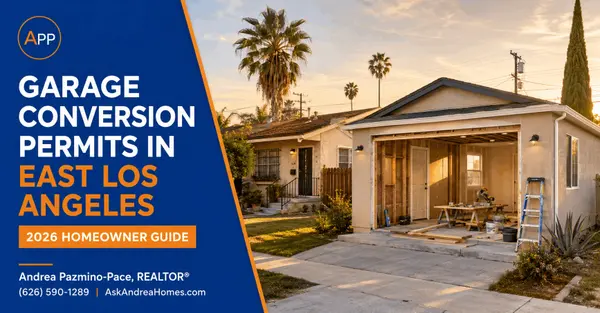
Garage Conversion Permits in East Los Angeles
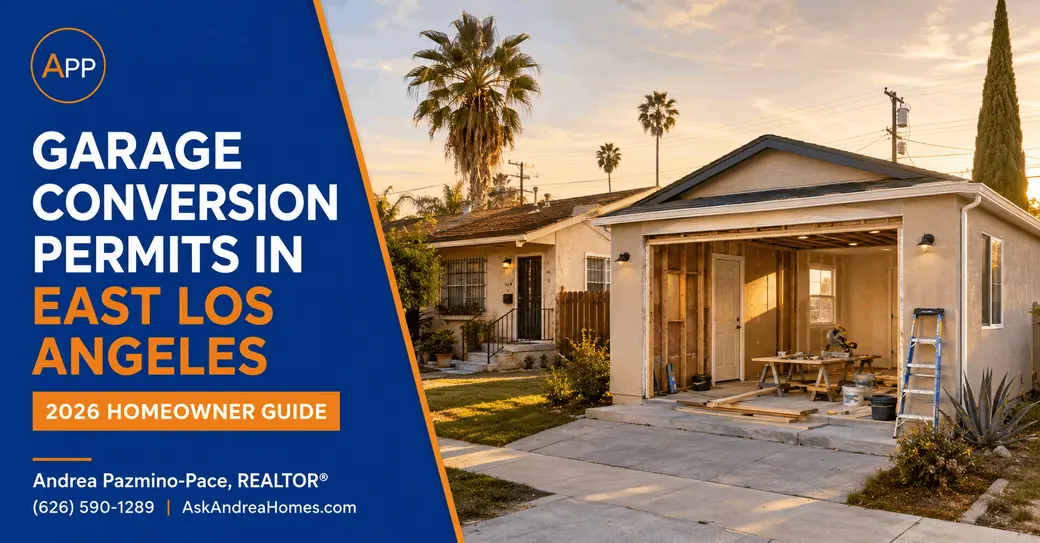
A 2026 Permit Guide for East Los Angeles Homeowners
By Andrea Pazmino-Pace, REALTOR®
HomeSmart Realty Group | (626) 590-1289 | AskAndreaHomes.com
Updated August 2026
Quick Answer
You generally need building permits to convert a garage into living space in East Los Angeles. Depending on the project, you may also need planning approval and separate electrical, plumbing, mechanical, fire, sewer, or utility reviews.
Most properties located in the unincorporated community of East Los Angeles are regulated by Los Angeles County Planning and Los Angeles County Public Works Building and Safety. Applications and case information may be handled through the County’s EPIC-LA permitting portal.
Do not begin construction until you confirm the property’s jurisdiction, zoning, existing permits, and the type of garage conversion you want to complete.
Is East Los Angeles Part of the City of Los Angeles?
East Los Angeles is primarily an unincorporated community governed by Los Angeles County. It is not the same jurisdiction as the City of Los Angeles.
This distinction matters because permit departments, zoning rules, fees, application portals, and inspectors can be different.
Before preparing plans, confirm whether the property is located in:
-
Unincorporated East Los Angeles
-
The City of Los Angeles
-
Commerce
-
Montebello
-
Monterey Park
-
Another nearby incorporated city
Do not rely only on the mailing address. A property with “Los Angeles” in its postal address may still be located in an unincorporated county area.
The Assessor’s Parcel Number, zoning records, and jurisdictional maps can help identify the correct agency.
What Is Considered a Garage Conversion?
A garage conversion changes all or part of a garage into another use.
Common conversions include:
-
Accessory dwelling unit, or ADU
-
Bedroom
-
Family room
-
Home office
-
Recreation room
-
Guest room
-
Laundry room
-
Bathroom
-
Storage or workshop
-
Junior ADU, when eligible
The permit requirements depend on the proposed use.
Converting a garage into an ADU is different from turning it into additional space connected to the primary home. An ADU must function as an independent residence and generally includes a kitchen, bathroom, sleeping area, living space, and separate entrance.
A bedroom or family-room conversion becomes part of the main residence and follows different zoning, parking, access, and building-code requirements.
Do You Need a Permit to Convert a Garage in East Los Angeles?
Yes, in most situations.
A building permit is generally required when a project changes a garage into habitable space or modifies:
-
Walls
-
Windows
-
Doors
-
Structural framing
-
Foundation
-
Plumbing
-
Electrical wiring
-
Gas lines
-
Heating or ventilation
-
Insulation
-
Fire separation
-
Drainage
-
Occupancy or legal use
Replacing a garage door with a framed wall and windows also requires approval.
A contractor’s statement that “everyone converts garages without permits” does not make the work legal.
Can You Convert a Garage Into an ADU?
Many East Los Angeles homeowners may be able to convert an existing garage into an ADU, subject to the property’s specific conditions.
An ADU generally needs:
-
A living and sleeping area
-
A full bathroom
-
A permanent kitchen
-
Heating
-
Proper ventilation
-
Natural light
-
Emergency escape openings where required
-
Safe electrical service
-
Approved water and sewer connections
-
Code-compliant ceiling height
-
Smoke and carbon-monoxide alarms
-
A separate exterior entrance
Existing garages were usually designed for vehicles, not residential occupancy. The structure may need extensive upgrades before it qualifies as a legal dwelling.
Do You Have to Replace the Lost Garage Parking?
California ADU law generally prohibits requiring replacement parking when an existing garage, carport, or covered parking structure is converted into an ADU.
This rule applies specifically to qualifying ADU conversions. A garage converted into a bedroom, family room, or another extension of the main house may be subject to different parking requirements.
Confirm how the project will be classified before removing the garage parking.
What Permits May Be Required?
A garage conversion could require several approvals.
Planning or zoning review
Los Angeles County Planning may review:
-
Zoning
-
Property boundaries
-
Setbacks
-
Existing buildings
-
Number of units
-
Parking
-
Property use
-
Easements
-
Community standards
-
Historic or environmental restrictions
Building permit
Building and Safety reviews construction plans for compliance with structural, energy, accessibility, health, and safety requirements.
Electrical permit
An electrical permit may be required for:
-
New circuits
-
Outlets
-
Lighting
-
Appliances
-
Heating and cooling equipment
-
Panel upgrades
-
A separate electrical meter
Plumbing permit
A plumbing permit may be required for:
-
Bathroom fixtures
-
Kitchen sink
-
Water heater
-
Water-supply lines
-
Sewer connections
-
Gas piping
Mechanical permit
Mechanical approval may be required for heating, ventilation, air conditioning, and exhaust systems.
Other reviews
Depending on the property, the project could also require review involving:
-
Fire Department
-
Public Health
-
Sewer agency
-
Water provider
-
Electric or gas utility
-
Public Works
-
School-district fees
-
Grading or drainage
Not every project needs every review.
What Plans Are Usually Needed?
A permit application may require:
-
Site plan
-
Existing floor plan
-
Proposed floor plan
-
Building elevations
-
Roof and framing plans
-
Foundation details
-
Electrical plan
-
Plumbing plan
-
Mechanical plan
-
Energy calculations
-
Door and window schedule
-
Structural calculations
-
Property survey
-
Sewer information
-
Title 24 documentation
A licensed architect, engineer, or experienced residential designer can help prepare the plans.
The County also offers a Standard ADU Plans Program. However, a standard plan for new construction may not directly fit an existing garage because every garage has different dimensions, foundations, framing, access, and utility conditions.
Step-by-Step Garage Conversion Permit Process
Step 1: Confirm the jurisdiction
Verify that the property is in unincorporated East Los Angeles and identify the departments with authority over the address.
Step 2: Review existing permits
Look for permits covering:
-
Original house
-
Garage construction
-
Additions
-
Electrical work
-
Plumbing
-
Prior conversions
-
ADUs
An existing garage is not automatically legal simply because it has been present for many years.
Step 3: Decide how the space will be used
Determine whether the project will create:
-
An ADU
-
An extension of the primary home
-
A bedroom
-
An office
-
A recreation room
-
Nonhabitable storage
The intended use controls many requirements.
Step 4: Obtain a property evaluation
A qualified professional should inspect the garage’s:
-
Foundation
-
Framing
-
Roof
-
Moisture conditions
-
Ceiling height
-
Electrical capacity
-
Plumbing access
-
Sewer location
-
Fire separation
-
Distance from property lines
Step 5: Prepare plans
The plans must show the existing conditions and all proposed work.
Step 6: Submit the application
Los Angeles County Planning applications and case tracking may be completed through EPIC-LA. Building plans must also be reviewed by the correct Building and Safety office.
Step 7: Respond to corrections
County reviewers may request corrections or additional information. The designer must revise and resubmit the plans.
Step 8: Pay fees and receive permits
Construction should not begin until the required permits are issued.
Step 9: Schedule inspections
Inspections may include:
-
Foundation
-
Underground plumbing
-
Framing
-
Electrical
-
Insulation
-
Drywall
-
Mechanical
-
Sewer
-
Final inspection
Do not cover work before the required inspection.
Step 10: Obtain final approval
A permit is not complete simply because it was issued. The work must pass final inspection and the permit must be finalized.
How Much Do Garage Conversion Permits Cost?
There is no single permit price for every East Los Angeles garage conversion.
Costs depend on:
-
Size
-
Intended use
-
Valuation of construction
-
Structural work
-
Number of permit types
-
Plan-check corrections
-
Utility connections
-
Sewer work
-
Required professional reports
-
Whether unpermitted work must be corrected
Homeowners should budget separately for:
-
Architectural or design plans
-
Engineering
-
Surveys
-
Energy calculations
-
Planning review
-
Building plan check
-
Building permits
-
Electrical, plumbing, and mechanical permits
-
Utility work
-
School fees, when applicable
-
Contractor labor and materials
Request current estimates directly from the County and utility providers after preliminary plans are available.
How Much Does the Entire Conversion Cost?
A basic permitted garage conversion without a kitchen or bathroom may cost considerably less than an ADU.
A complete garage-to-ADU conversion in East Los Angeles could cost approximately $120,000 to $250,000 or more, depending on:
-
Foundation condition
-
Sewer distance
-
Electrical upgrades
-
Structural repairs
-
Roof condition
-
Size
-
Finishes
-
Site access
-
Existing unpermitted work
-
Contractor pricing
These are general planning estimates, not construction quotes.
A garage that appears suitable may still need a new foundation, reinforced walls, a new roof, upgraded utilities, or extensive moisture repairs.
How Long Does the Permit Process Take?
The permit and construction process may take several months to more than a year.
A general timeline could include:
| Stage | Possible time |
|---|---|
| Property and permit research | 2–6 weeks |
| Design and engineering | 1–4 months |
| Planning and plan review | 2–6 months or longer |
| Corrections and approval | Several weeks or months |
| Construction | 4–10 months |
| Final inspections | Several weeks |
The timeline may be longer if:
-
Records are missing
-
The garage was constructed without permits
-
Major structural corrections are necessary
-
Utility approvals are delayed
-
The property has code-enforcement violations
-
Plans require repeated corrections
-
The owner changes the design
What Happens if the Garage Was Already Converted Without Permits?
An unpermitted garage conversion does not automatically become legal because it has existed for many years.
The County may require the owner to:
-
Submit plans showing existing conditions
-
Open walls for inspection
-
Correct unsafe work
-
Upgrade wiring and plumbing
-
Repair the foundation or framing
-
Add windows or emergency exits
-
Correct ceiling height or ventilation
-
Remove an illegal kitchen
-
Address zoning or parking problems
-
Restore the space to a garage
-
Pay permit and investigation fees
Legalization is not guaranteed. Approval depends on whether the conversion can comply with current rules or an applicable legalization program.
Before contacting enforcement or beginning demolition, consider consulting a qualified designer, contractor, or attorney familiar with unpermitted construction.
Can You Sell a House With an Unpermitted Garage Conversion?
Yes, a sale may still be possible, but the conversion can affect:
-
Property value
-
Buyer confidence
-
Financing
-
Appraisal
-
Insurance
-
Disclosures
-
Inspections
-
Title review
-
Negotiations
-
Future code enforcement
An appraiser may not give the space the same value as legally permitted living area. A buyer’s lender may also require repairs, documentation, or correction of safety problems.
California sellers should disclose known material facts, including known permit issues.
Do not advertise an unpermitted garage conversion as legal living area or a permitted ADU.
Will a Permitted Conversion Increase Property Taxes?
A permitted garage conversion may result in a new-construction assessment for the value added by the project.
The Los Angeles County Assessor generally assesses the value of qualifying new construction. The existing home usually retains its current assessed value unless another reassessment event occurs.
The increase is based on the Assessor’s determination of added value, not necessarily the amount the owner spent.
Can a Legal Garage Conversion Increase Home Value?
It may.
A permitted conversion could provide:
-
Additional living space
-
Rental-income potential
-
Multigenerational housing
-
Space for adult children or parents
-
A private office
-
Greater buyer interest
-
More flexible use
The added value depends on:
-
Legal use
-
Finalized permits
-
Size
-
Layout
-
Privacy
-
Parking
-
Quality
-
Rental potential
-
Local buyer demand
The construction cost does not automatically equal the increase in market value.
Common Garage Conversion Mistakes
Avoid these problems:
-
Starting before permits are issued
-
Hiring an unlicensed contractor
-
Assuming the garage is legal
-
Using plans prepared for another property
-
Ignoring sewer location
-
Underestimating electrical upgrades
-
Covering work before inspection
-
Calling a converted garage an ADU without approval
-
Failing to finalize permits
-
Paying large amounts without written contracts
-
Ignoring existing code violations
-
Advertising unpermitted space as legal square footage
Frequently Asked Questions
Can I turn my East Los Angeles garage into a bedroom?
Possibly, but it must meet the requirements for habitable space. Parking and zoning requirements may also apply because the project is not necessarily an ADU.
Can I add a kitchen and rent the garage?
Only after receiving approval for a legal dwelling unit. Adding cooking facilities without permits can create an illegal unit.
Can I convert a detached garage into an ADU?
Many detached garages may qualify, but the structure, zoning, utilities, setbacks, fire requirements, and property conditions must be reviewed.
Do I need an architect?
Not every project legally requires an architect, but professionally prepared plans are strongly recommended. Structural engineering may be required.
Can I do the work myself?
An owner-builder may be allowed to complete certain work, but the owner assumes legal, safety, workers’ compensation, and supervision responsibilities.
Do I need to replace the parking?
Replacement parking generally cannot be required when a qualifying garage is converted into an ADU. Other types of conversions may follow different rules.
Where do I apply?
For unincorporated East Los Angeles, begin by confirming requirements with Los Angeles County Planning and Public Works Building and Safety. Planning applications and status information may be available through EPIC-LA.
Conclusion
Garage conversion permits in East Los Angeles depend on the property’s jurisdiction, existing permits, zoning, structure, utilities, and proposed use.
Begin by confirming that the property is in unincorporated East Los Angeles. Then research the existing permits, select the correct project type, obtain professional plans, and receive approval before construction begins.
If you are considering a garage conversion before selling, buying, or improving an East Los Angeles property, I can help you evaluate how permitted and unpermitted spaces may affect its marketability and resale value.
Andrea Pazmino-Pace, REALTOR®
HomeSmart Realty Group
Phone: (626) 590-1289
Website: AskAndreaHomes.com
This article provides general educational information. It is not architectural, engineering, construction, legal, tax, zoning, or permit advice. Confirm all requirements directly with the agency responsible for the property.
Official sources: Los Angeles County ADU information, EPIC-LA permitting portal information, Los Angeles County Planning, and County code-enforcement information.
Categories
- All Blogs (89)
- Accessory Dwelling Units (1)
- Accessory Dwelling Units (ADUs) (1)
- ADUs and Property Improvements (1)
- agregar a alguien en el titulo de la casa (2)
- Albaceas y Administradores (1)
- Apelaciones de Impuestos (1)
- Appeal property taxes in Los Angeles County (1)
- Baldwin Park (2)
- Baldwin Park News (2)
- Baldwin Park property taxes (1)
- Baldwin Park Real Estate (9)
- Baldwin Park Real Estate Market (2)
- Beneficios Fiscales para Propietarios (1)
- Bienes Raíces (4)
- Bienes Raíces de Baldwin Park (1)
- Bienes Raíces de Sucesiones en Los Ángeles (1)
- Bienes Raíces del Condado de Los Ángeles (1)
- Bienes Raíces en Baldwin Park (2)
- Bienes Raíces en Boyle Heights (1)
- Bienes Raíces en California (3)
- Bienes Raíces en East Los Ángeles (2)
- Bienes Raíces en el Condado de Los Ángeles (3)
- Bienes Raíces en el Este de Los Ángeles (1)
- Bienes Raíces en El Monte (1)
- Bienes Raíces en el Sur de California (4)
- Bienes Raíces en Los Ángeles (1)
- bienes y raices en compton (2)
- Bienes y Raices en El Este de Los Angeles (1)
- bienes y raices ideas para vender (2)
- Bienes y Raices in Compton (1)
- bienes y raices in downey ca (1)
- Boyle Heights first-time homebuyer (1)
- Boyle Heights home prices, (1)
- Boyle Heights Mercado Inmobiliario (1)
- Boyle Heights Precios de la Vivienda (1)
- Boyle Heights Primeros Compradores (1)
- Boyle Heights real estate market (1)
- Boyle Heights zoning (2)
- Building Permits (1)
- Buyer Resources (4)
- Buying a Home (3)
- Buying a Home in Baldwin Park (1)
- buying a home in Boyle Heights 2026 (1)
- california bienes y raices (2)
- California Homeowners (2)
- California Probate (1)
- California Property Taxes (1)
- california real estate (2)
- California Real Estate Laws (1)
- California Real Estate Taxes (1)
- Capital Gains Tax (1)
- Challenge assessed home value (1)
- Closing Costs (1)
- Code Enforcement (1)
- comision del agente (1)
- Community Development (1)
- como comprar casa (1)
- como poner una oferta de compra (1)
- Comparative Market Analysis (1)
- Compra de Casas (3)
- Compra de Vivienda (1)
- Compra de Viviendas (1)
- Compradores de Primera Vivienda (1)
- Compradores de Viviendas (1)
- Comprar casa en L.A. (1)
- Compton Real estate (1)
- Comunidades Cercanas al Transporte (1)
- Consejos de Bienes Raíces (1)
- Consejos para Propietarios (1)
- Consejos para Vendedores (1)
- Construcción de ADU (1)
- Construcciones Sin Permisos (1)
- Conversiones de Garaje (2)
- Costo de venta de una casa en LA (2)
- costos al vender su casa (1)
- costos de cierre (1)
- costos de escrow (1)
- costos de venta de casa (1)
- costos de venta de casa en ca (2)
- Cumplimiento de Códigos (1)
- Decline-in-Value Review (1)
- Desarrollo Urbano (1)
- Divulgaciones de la Propiedad (1)
- downey home selling (1)
- Downey market update (1)
- downey real estate (1)
- East Los Angeles (1)
- East Los Angeles Real Estate (6)
- Eastside Los Angeles Real Estate (1)
- Educación Inmobiliaria (5)
- El Monte Real Estate (3)
- El Sereno Bienes Y Raices (1)
- El Sereno Mercado Inmobiliario (1)
- El Sereno Precio de Las Casas (1)
- El Sereno Priemeros-Compradores (1)
- Escrow Fees (1)
- Estate Administration (1)
- Executors and Administrators (1)
- first time home buyers (1)
- first-time home buyer (4)
- First-Time Home Buyer Guide (1)
- First-Time Home Buyers (2)
- Garage Conversions (2)
- Gentrificación y Desarrollo (1)
- Gentrification and Development (1)
- get your offer accepted (1)
- Gravámenes de Contratistas (1)
- Gravámenes sobre Propiedades (1)
- guia para compradores (1)
- Guía para Compradores Primerizos (1)
- Guías de Vecindarios (2)
- Guías del Mercado Local (1)
- Guías para Vender Casa (1)
- Hipoteca y Financiamiento (1)
- Home Buying (1)
- home buying process (2)
- Home Improvement (1)
- home loans (1)
- Home Maintenance (1)
- home offers (1)
- Home Price Trends (1)
- Home Prices & Market Trends (2)
- Home Pricing (1)
- Home Seller Resources (3)
- Home Selling (4)
- home selling cost (1)
- Home Selling Costs (2)
- Home Selling Timeline (1)
- Home Value (2)
- Home Values (2)
- Homeowner Exemptions (1)
- Homeowner Resources (4)
- Homeowner Tips (3)
- Homeowners (2)
- Homeowners Insurance (1)
- Housing Market (1)
- How Much House Can I Afford? (2)
- how to place an offer in a home (1)
- how to purchase a home (1)
- Impuesto sobre Ganancias de Capital (1)
- Impuestos sobre la Propiedad (3)
- Informacion del mercado de casas en Baldwin Park (2)
- Infrastructure Updates (1)
- Inherited Property (2)
- Inversión en Bienes Raíces (1)
- Inversión Inmobiliaria (1)
- Judgment Liens (1)
- LA Real Estate (1)
- LA Real Estate Market (1)
- Local Market Guides (1)
- los angeles bienes y raices (3)
- Los Angeles County assessment appeal (1)
- Los Angeles County Assessor (1)
- Los Angeles County Property Taxes (1)
- Los Angeles County Real Estate (4)
- Los Angeles County Record (1)
- Los Angeles Home Sale Cost (2)
- Los Angeles Home Sellers (1)
- Los Angeles Homeowners (1)
- Los angeles housing (1)
- Los Angeles Housing Market Updates (1)
- Los Angeles Neighborhoods (1)
- Los Angeles Probate Real Estate (1)
- los angeles real estate (2)
- Lower property taxes in California (1)
- Market update (5)
- Mechanic’s Liens (1)
- Mejoras del Hogar (1)
- Mejoras para el Hogar (1)
- Mercado de Vivienda (1)
- Mercado Inmobiliario (4)
- Mortgage & Financing (2)
- move up buyers (1)
- Mudanzas y Reubicación (1)
- Multigenerational Living (1)
- Neighborhood Guides (2)
- Neighborhood resource (1)
- Neighborhoods to Watch (1)
- oferta aceptada (1)
- Permisos de Construcción (1)
- Plan de Mejoras (1)
- Planificación Patrimonial (1)
- Precios de Viviendas (1)
- Precios y Tendencias del Mercado (2)
- Preparar una Casa para la Venta (1)
- Preparing Your Home for Sale (1)
- primer comprador en L.A. (1)
- primeros compradores (5)
- Probate Home Sales (1)
- Probate Property Buyers (1)
- Probate Real Estate (1)
- Probate y Bienes Raíces en East Los Angeles (1)
- Programa de Mejoras de Capital (1)
- Property Assessment (1)
- Property Disclosures (1)
- Property Investment (1)
- Property Taxes (2)
- Property Value (1)
- Property-tax appeal deadline (1)
- Property-Tax Appeals (2)
- Property-tax exemptions in California (1)
- Propiedades de Alquiler (1)
- Propiedades de Sucesión (1)
- Propiedades Heredadas (2)
- Propietarios de California (1)
- Propietarios de Vivienda (1)
- Propietarios de Viviendas en California (2)
- Propietarios Mayores de 55 Años (1)
- Proposición 19 (1)
- Proposición 8 (1)
- Proposition 13 (1)
- Proposition 19 (1)
- Proposition 8 (2)
- Proposition 8 property-tax reduction (1)
- Real Estate Advice (2)
- Real Estate Education (1)
- Real Estate for Heirs (1)
- Real Estate Investing (1)
- Real Estate Market (1)
- Real Estate Market Trends (1)
- Real Estate Market Updates (2)
- real estate tips (1)
- Realtor Commissions (1)
- Recursos para Compradores (1)
- Recursos para Herederos (1)
- Recursos para Propietarios (3)
- Recursos para Vendedores (1)
- Registros del Condado de Los Ángeles (1)
- remover a alguien del titulo de la casa (1)
- Rental Property (1)
- reparaciones al vender (1)
- San Gabriel Valley (1)
- San Gabriel Valley Real Estate (1)
- Seguro de Vivienda (1)
- Seller Resources (5)
- Seller Tips (3)
- Selling a Home (1)
- Selling a Home in Baldwin Park (1)
- Selling a House (1)
- Selling an Inherited Home (1)
- Sentencias Judiciales (1)
- Should You Sell Before Buying? (1)
- Southern California Real Estate (3)
- Step-Up in Basis (1)
- Sucesiones en California (1)
- Tasación de Propiedades (1)
- Tendencias del Mercado Inmobiliario (1)
- tips para duenos de casa (2)
- tips para quienes venden su casa (1)
- Title & Deeds (4)
- Title and Escrow (1)
- titulo de la casa (1)
- titulo de la propiedad (1)
- Título y Escrow (1)
- Transit-Oriented Communities (1)
- Trust Property (1)
- Unidades de Vivienda Accesoria (ADU) (1)
- Unidades de Vivienda Accesorias (ADU) (1)
- Unpermitted Construction (1)
- Valor de la Propiedad (1)
- Valor de la Vivienda (2)
- Valor de las Propiedades (1)
- Valor de Viviendas (1)
- Vecindarios con Potencial de Crecimiento (1)
- Vecindarios de Los Ángeles (1)
- vender tu casa (1)
- vender una casa (3)
- vendiendo tu casa (3)
- Venta de casa (2)
- Venta de casa en LA (3)
- Venta de Casas (2)
- Venta de Casas Tal Como Están (1)
- Venta de Propiedades Heredadas (2)
- Venta de Viviendas (3)
- Vivienda Multigeneracional (1)
Recent Posts