What Happens If You Buy a Home With Unpermitted Additions in California?
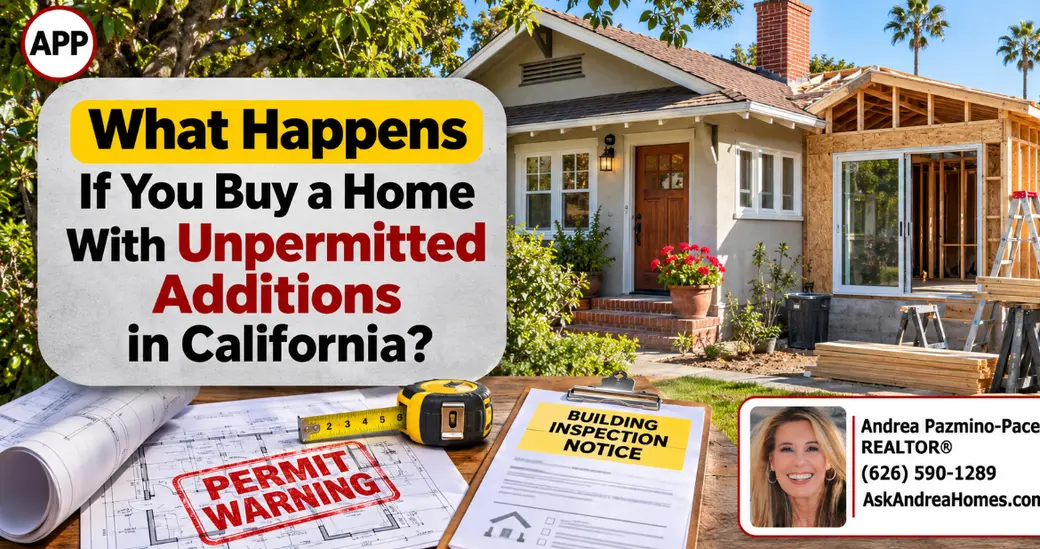
An unpermitted addition is any room, structure, or major alteration—like a converted garage, added bedroom, bathroom, or ADU—that was built without the required building permits and final inspection sign-off from the local city or county. These additions are common in older Los Angeles and Orange County neighborhoods, where homeowners sometimes built extra square footage over the decades without pulling permits, and buyers who don't catch this during escrow can end up responsible for costly corrections, permit fees, or even forced removal of the work after closing.
What Counts as an Unpermitted Addition or Alteration in California?
An unpermitted addition includes anything that required a building permit under the local municipal code but didn't get one—common examples in LA and Orange County include converted garages used as bedrooms or rental units, added square footage like a bonus room or expanded kitchen, a second story addition, an in-law unit or ADU built before current streamlined ADU laws, and even significant electrical, plumbing, or structural work done without inspection. Cosmetic work like paint, flooring, or non-structural interior finishes typically doesn't require a permit, but anything that changes the structure, adds living space, or affects electrical and plumbing systems generally does.
How Can a Buyer Find Out If a Property Has Unpermitted Work?
Buyers can request a permit history report from the city or county building department—many jurisdictions in LA County, including the City of Los Angeles, offer this online through their building and safety portals—which lists all permits pulled for the address and lets a buyer compare that history against the home's actual square footage and layout. A comparison between the county assessor's recorded square footage and the square footage the listing advertises can also flag a mismatch worth investigating, and a general home inspector will often note obvious signs of unpermitted work, like mismatched electrical panels or construction that doesn't meet current code, even though confirming permit status isn't technically part of a standard inspection.
What Risks Does Unpermitted Work Create for a Buyer?
The biggest risk is that the city can require a buyer to either retroactively permit the work—which can mean opening up walls for inspection, bringing the work up to current code, and paying permit and plan-check fees—or remove it entirely, and either outcome can be expensive and disruptive after closing. Unpermitted square footage also generally isn't counted in the home's assessed value or appraised value, which can affect financing, and if the work created a habitability or safety issue, a buyer could face liability if something goes wrong later, such as a tenant living in an unpermitted unit getting injured.
Can You Get a Loan or Insurance on a Home With Unpermitted Additions?
Lenders generally underwrite based on the permitted, assessed square footage, so an appraiser may exclude unpermitted square footage from the home's value, which can affect the loan amount a buyer qualifies for, and some lenders ask for repair or permit conditions before funding if unpermitted work is flagged during the appraisal. Homeowners insurance can also be affected, since a policy may not cover damage to or liability from unpermitted structures, so it's worth disclosing known unpermitted work to an insurance agent directly rather than assuming standard coverage applies.
What Should Buyers Do If They Find Unpermitted Work During Escrow?
Buyers who discover unpermitted work during their inspection period can negotiate with the seller for a price reduction, a credit toward future permitting costs, or ask the seller to pull permits and complete any required corrections before closing, though sellers aren't always willing or able to do this on a reasonable timeline. In some cases, buyers choose to move forward anyway with full knowledge of the issue and budget for permitting or removal themselves, but this decision is worth discussing with a real estate attorney or experienced agent, since the right approach depends on how significant the unpermitted work is and how it affects the home's value and usability.
Frequently Asked Questions
Does the seller have to disclose unpermitted work in California?
Yes, generally. California's Transfer Disclosure Statement requires sellers to disclose known material facts about the property, including known unpermitted additions or alterations, though a seller who is genuinely unaware of unpermitted work from a prior owner may not always know to disclose it.
Can you get a permit after the fact for work that's already done?
Often yes, through a process some jurisdictions call a "permit after the fact" or retroactive permit, which usually requires opening up finished walls or ceilings for inspection, bringing the work up to current code, and paying permit fees that can be higher than if the permit had been pulled originally.
Does unpermitted square footage show up on the county assessor's records?
Not always. The assessor's recorded square footage often reflects only permitted space, so a home that's advertised at a certain size based on a buyer's own measurement or an MLS listing may be larger than what the assessor and lender recognize as legal, permitted space.
Is it illegal to live in an unpermitted ADU or converted garage?
It depends on the jurisdiction and whether the unit meets basic safety standards, but renting out or occupying an unpermitted unit can expose a homeowner to code enforcement action, fines, or tenant liability issues, which is part of why many cities have adopted streamlined legalization programs for older unpermitted ADUs.
Updated for November 2026.
Categories
- All Blogs (248)
- Accessory Dwelling Units (2)
- Accessory Dwelling Units (ADUs) (1)
- ADUs & Home Improvement (168)
- ADUs and Property Improvements (3)
- agregar a alguien en el titulo de la casa (2)
- Albaceas y Administradores (1)
- Apelaciones de Impuestos (1)
- Appeal property taxes in Los Angeles County (1)
- Baldwin Park (2)
- Baldwin Park News (2)
- Baldwin Park property taxes (1)
- Baldwin Park Real Estate (9)
- Baldwin Park Real Estate Market (2)
- Beneficios Fiscales para Propietarios (1)
- Bienes Raíces (4)
- Bienes Raíces de Baldwin Park (1)
- Bienes Raíces de Sucesiones en Los Ángeles (1)
- Bienes Raíces del Condado de Los Ángeles (1)
- Bienes Raíces en Baldwin Park (2)
- Bienes Raíces en Boyle Heights (1)
- Bienes Raíces en California (4)
- Bienes Raíces en East Los Ángeles (3)
- Bienes Raíces en el Condado de Los Ángeles (3)
- Bienes Raíces en el Este de Los Ángeles (1)
- Bienes Raíces en El Monte (1)
- Bienes Raíces en el Sur de California (4)
- Bienes Raíces en Los Ángeles (2)
- bienes y raices en compton (2)
- Bienes y Raices en El Este de Los Angeles (1)
- bienes y raices ideas para vender (2)
- Bienes y Raices in Compton (1)
- bienes y raices in downey ca (1)
- Boyle Heights first-time homebuyer (1)
- Boyle Heights home prices, (1)
- Boyle Heights Mercado Inmobiliario (1)
- Boyle Heights Precios de la Vivienda (1)
- Boyle Heights Primeros Compradores (1)
- Boyle Heights real estate market (1)
- Boyle Heights zoning (2)
- Building Permits (1)
- Buyer Resources (168)
- Buying a Home (3)
- Buying a Home in Baldwin Park (1)
- buying a home in Boyle Heights 2026 (1)
- california bienes y raices (2)
- California Homeowners (3)
- California Homeowners Insurance (1)
- California Probate (1)
- California Property Taxes (1)
- california real estate (2)
- California Real Estate Laws (1)
- California Real Estate Taxes (1)
- Capital Gains Tax (1)
- Challenge assessed home value (1)
- Closing Costs (1)
- Code Enforcement (1)
- comision del agente (1)
- Community Development (1)
- como comprar casa (1)
- como poner una oferta de compra (1)
- Comparative Market Analysis (1)
- Compra de Casas (3)
- Compra de Vivienda (1)
- Compra de Viviendas (2)
- Compradores de Primera Vivienda (1)
- Compradores de Viviendas (1)
- Comprar casa en L.A. (1)
- Compton Real estate (1)
- Comunidades Cercanas al Transporte (1)
- Consejos de Bienes Raíces (1)
- Consejos para Propietarios (1)
- Consejos para Vendedores (1)
- Construcción de ADU (1)
- Construcciones Sin Permisos (1)
- Conversiones de Garaje (2)
- Costo de venta de una casa en LA (3)
- costos al vender su casa (1)
- costos de cierre (1)
- costos de escrow (1)
- costos de venta de casa (1)
- costos de venta de casa en ca (2)
- Cumplimiento de Códigos (1)
- Decline-in-Value Review (1)
- Desarrollo Urbano (1)
- Divulgaciones de la Propiedad (1)
- downey home selling (1)
- Downey market update (1)
- downey real estate (1)
- East Los Angeles (2)
- East Los Angeles Real Estate (6)
- Eastside Los Angeles Real Estate (1)
- Educación Inmobiliaria (8)
- Educación sobre Seguros (1)
- El Monte Real Estate (3)
- El Sereno Bienes Y Raices (1)
- El Sereno Mercado Inmobiliario (1)
- El Sereno Precio de Las Casas (1)
- El Sereno Priemeros-Compradores (1)
- Escrow Fees (1)
- Estate Administration (1)
- Executors and Administrators (1)
- Financing & Mortgages (164)
- first time home buyers (1)
- first-time home buyer (4)
- First-Time Home Buyer Guide (1)
- First-Time Home Buyers (2)
- Foreclosure & Distressed Sales (166)
- Garage Conversions (2)
- Gentrificación y Desarrollo (1)
- Gentrification and Development (1)
- get your offer accepted (1)
- Gravámenes de Contratistas (1)
- Gravámenes sobre Propiedades (1)
- guia para compradores (1)
- Guía para Compradores Primerizos (1)
- Guías de Vecindarios (2)
- Guías del Mercado Local (1)
- Guías para Vender Casa (1)
- Hipoteca y Financiamiento (1)
- Home Buying (1)
- home buying process (2)
- Home Improvement (1)
- home loans (1)
- Home Maintenance (1)
- home offers (1)
- Home Price Trends (1)
- Home Prices & Market Trends (2)
- Home Pricing (1)
- Home Seller Resources (3)
- Home Selling (4)
- home selling cost (1)
- Home Selling Costs (2)
- Home Selling Timeline (1)
- Home Value (2)
- Home Values (2)
- Homeowner Resources (3)
- Homeowner Tips (3)
- Homeowners (2)
- Homeowners Insurance (165)
- Housing Market (1)
- How Much House Can I Afford? (2)
- how to place an offer in a home (1)
- how to purchase a home (1)
- Impuesto sobre Ganancias de Capital (1)
- Impuestos sobre la Propiedad (4)
- Informacion del mercado de casas en Baldwin Park (2)
- Infrastructure Updates (1)
- Inherited Property (2)
- Inversión en Bienes Raíces (1)
- Inversión Inmobiliaria (1)
- Judgment Liens (1)
- LA Real Estate (1)
- LA Real Estate Market (1)
- Local Market Guides (1)
- Long Beach Real Estate (4)
- los angeles bienes y raices (3)
- Los Angeles County assessment appeal (1)
- Los Angeles County Assessor (1)
- Los Angeles County Real Estate (13)
- Los Angeles County Record (1)
- Los Angeles Home Sale Cost (2)
- Los Angeles Home Sellers (1)
- Los Angeles Homeowners (2)
- Los angeles housing (1)
- Los Angeles Housing Market Updates (1)
- Los Angeles Neighborhoods (1)
- Los Angeles Probate Real Estate (1)
- los angeles real estate (2)
- Lower property taxes in California (1)
- Lynwood Real Estate (4)
- Market update (5)
- Market Updates & Trends (164)
- Mechanic’s Liens (1)
- Mejoras del Hogar (1)
- Mejoras para el Hogar (1)
- Mercado de Vivienda (1)
- Mercado Inmobiliario (4)
- Mortgage & Financing (2)
- move up buyers (1)
- Mudanzas y Reubicación (1)
- Multigenerational Living (1)
- Neighborhood Guides (3)
- Neighborhood resource (2)
- Neighborhoods to Watch (1)
- oferta aceptada (1)
- Permisos de Construcción (1)
- Permits & Code Compliance (166)
- Plan de Mejoras (1)
- Planificación Patrimonial (1)
- Precios de Viviendas (1)
- Precios y Tendencias del Mercado (2)
- Preparar una Casa para la Venta (1)
- Preparing Your Home for Sale (1)
- primer comprador en L.A. (1)
- primeros compradores (5)
- Probate & (1)
- Probate & Inherited Property (163)
- Probate Home Sales (1)
- Probate Property Buyers (1)
- Probate Real Estate (1)
- Probate y Bienes Raíces en East Los Angeles (1)
- Programa de Mejoras de Capital (1)
- Property Assessment (1)
- Property Disclosures (1)
- Property Investment (1)
- Property Taxes (167)
- Property Value (1)
- Property-tax appeal deadline (1)
- Property-Tax Appeals (1)
- Property-tax exemptions in California (1)
- Propiedades de Alquiler (1)
- Propiedades de Sucesión (1)
- Propiedades Heredadas (2)
- Propietarios de California (1)
- Propietarios de Vivienda (1)
- Propietarios de Viviendas en California (2)
- Propietarios Mayores de 55 Años (1)
- Proposición 19 (1)
- Proposición 8 (1)
- Proposition 8 (1)
- Proposition 8 property-tax reduction (1)
- Protección de Propiedades (1)
- Real Estate Advice (3)
- Real Estate Education (1)
- real estate en Los Angeles (1)
- Real Estate for Heirs (1)
- Real Estate Investing (1)
- Real Estate Investment & Rentals (164)
- Real Estate Market (1)
- Real Estate Market Trends (1)
- Real Estate Market Updates (2)
- real estate tips (2)
- Realtor Commissions (1)
- Recursos para Compradores (1)
- Recursos para Herederos (1)
- Recursos para Propietarios (4)
- Recursos para Vendedores (1)
- Registros del Condado de Los Ángeles (1)
- remover a alguien del titulo de la casa (1)
- Rental Property (1)
- reparaciones al vender (1)
- Riesgos Naturales (1)
- San Gabriel Valley (1)
- San Gabriel Valley Real Estate (1)
- Seguro contra Terremotos (1)
- Seguro de Vivienda (1)
- Seguros para Propietarios en California (1)
- Seller Resources (171)
- Seller Tips (3)
- Selling a Home (1)
- Selling a Home in Baldwin Park (1)
- Selling a House (1)
- Selling an Inherited Home (1)
- Sentencias Judiciales (1)
- Should You Sell Before Buying? (1)
- Southern California Real Estate (3)
- Step-Up in Basis (1)
- Sucesiones en California (1)
- Tasación de Propiedades (1)
- Tendencias del Mercado Inmobiliario (1)
- tips para duenos de casa (2)
- tips para quienes venden su casa (1)
- Title & Deeds (4)
- Title and Escrow (1)
- Title, Escrow & Closing Costs (164)
- titulo de la casa (1)
- titulo de la propiedad (1)
- Título y Escrow (1)
- Transit-Oriented Communities (1)
- Trust Property (1)
- Unidades de Vivienda Accesoria (ADU) (1)
- Unidades de Vivienda Accesorias (ADU) (1)
- Unpermitted Construction (1)
- Valor de la Propiedad (1)
- Valor de la Vivienda (2)
- Valor de las Propiedades (1)
- Valor de Viviendas (1)
- Vecindarios con Potencial de Crecimiento (1)
- Vecindarios de Los Ángeles (1)
- vender tu casa (1)
- vender una casa (3)
- vendiendo tu casa (3)
- Venta de casa (2)
- Venta de casa en LA (3)
- Venta de Casas (2)
- Venta de Casas Tal Como Están (1)
- Venta de Propiedades Heredadas (2)
- Venta de Viviendas (4)
- Vivienda Multigeneracional (1)
Recent Posts