Can You Rent Out Your Property on Airbnb in Los Angeles County? Short-Term Rental Rules Explained
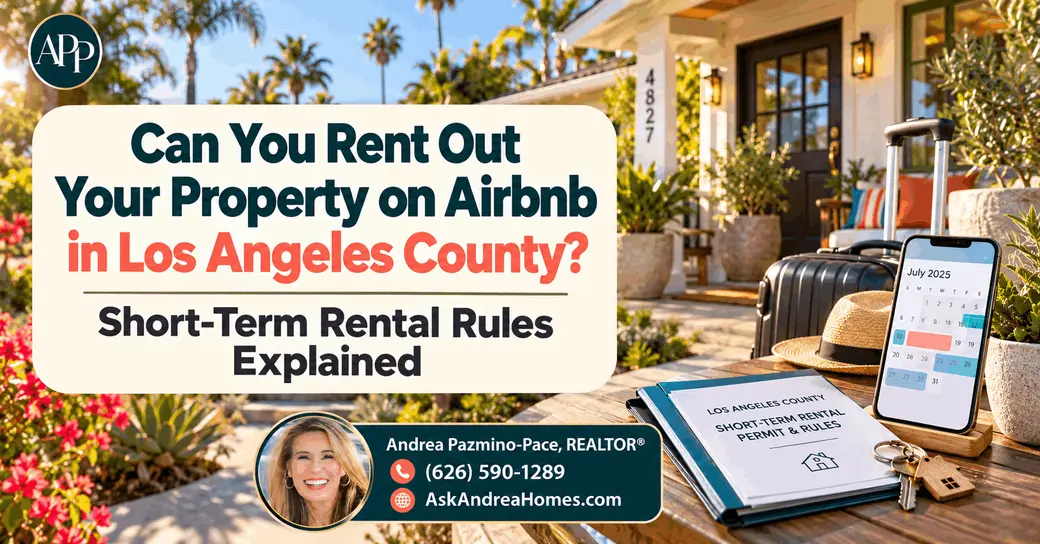
Can You Rent Out Your Property on Airbnb in Los Angeles County? Short-Term Rental Rules Explained
Yes, you can rent out property on Airbnb in Los Angeles County, but the rules depend heavily on exactly where the property sits — the City of Los Angeles, an unincorporated part of the county, or one of the county's 88 other incorporated cities each enforce their own separate short-term rental ordinance, and nearly all of them require the property to be your primary residence rather than a second home or pure investment property. Here's how the rules actually work depending on where your property is, and what can get your listing shut down.
What Are the Short-Term Rental Rules in the City of Los Angeles?
The City of LA's Home-Sharing Ordinance, in effect since November 2019, requires hosts to register through the city's online portal and display a unique registration number on every listing. Only your primary residence — defined as where you live at least six months of the year — qualifies, and the city caps short-term rentals at 120 nights per year unless you obtain an Extended Home-Sharing permit, which requires a clean registration history with no more than one citation in three years. The annual permit fee runs $192 for a regular permit and $1,030 for the extended version, and the city collects a 14% Transient Occupancy Tax automatically through Airbnb on City of LA bookings.
How Are the Rules Different in Unincorporated Los Angeles County?
If your property sits in an unincorporated area of the county rather than inside a city's limits, you're under the county's own short-term rental ordinance instead, which requires you to occupy the property as your primary residence at least 275 days a year and pay a $914 annual registration fee through the Treasurer and Tax Collector. The county's rules split stays into two categories: unhosted stays are capped at 90 nights per year, while hosted stays (where you're present except during work hours) have no annual cap but can't exceed 30 consecutive days. The county charges a 12% Transient Occupancy Tax, which — unlike the city — hosts must self-collect and remit monthly rather than having it handled automatically through the platform.
What Properties Are Never Allowed to Be Listed as Short-Term Rentals?
Under the county's unincorporated-area rules, you cannot register a second home, a pure investment property you don't live in, an ADU or junior ADU, a guesthouse or pool house, or a rent-restricted affordable housing unit as a short-term rental. These restrictions exist specifically to prevent short-term rentals from pulling long-term housing stock out of the market, so if a property doesn't meet the primary-residence test, there's no fee or workaround that makes it eligible.
Do Other Cities Within LA County Have Their Own Separate Rules?
Yes — Los Angeles County contains 88 incorporated cities, including Long Beach, Santa Monica, and Pasadena, and each one enforces its own distinct short-term rental ordinance with its own registration process, caps, and tax rates. There's no countywide short-term rental rule that applies everywhere; the county's ordinance covers only unincorporated areas, so before listing a property anywhere in LA County, you need to confirm the specific jurisdiction it falls under and check that city's rules individually. The county offers a jurisdiction lookup tool to help you determine whether an address is inside city limits or unincorporated territory.
What Happens If You Operate a Short-Term Rental Without Registering?
Operating without a valid registration or permit can result in citations and fines, and repeat violations can lead to legal injunctions, permit revocation, and further legal action against the host. Both the city and county actively monitor listing platforms for unregistered properties, and since registration numbers must be displayed publicly on listings, an unregistered or improperly registered unit is easy for enforcement to spot.
Frequently Asked Questions
Can I short-term rent a property I own but don't live in?
Generally no, both the City of LA and unincorporated LA County require the property to be your primary residence. A pure investment property or second home doesn't qualify under either ordinance.
Does Airbnb collect and pay the occupancy tax for me?
Within the City of Los Angeles, yes — Airbnb has automatically collected and remitted the 14% Transient Occupancy Tax on City listings since 2016. In unincorporated county areas, hosts are responsible for self-collecting and remitting the 12% tax themselves on a monthly basis.
Are there any parts of LA County where short-term rental rules don't apply yet?
A few coastal areas, including Marina del Rey, Santa Catalina Island, and parts of the Santa Monica Mountains, remain temporarily unregulated while awaiting California Coastal Commission certification, though this status can change.
How do I find out which jurisdiction my property falls under?
Los Angeles County provides an online jurisdiction lookup tool where you can enter an address to confirm whether it falls within a specific city's limits or unincorporated county territory, which determines which ordinance and registration process applies.
Updated October 2026.
Categories
- All Blogs (182)
- Accessory Dwelling Units (2)
- Accessory Dwelling Units (ADUs) (1)
- ADUs & Home Improvement (102)
- ADUs and Property Improvements (3)
- agregar a alguien en el titulo de la casa (2)
- Albaceas y Administradores (1)
- Apelaciones de Impuestos (1)
- Appeal property taxes in Los Angeles County (1)
- Baldwin Park (2)
- Baldwin Park News (2)
- Baldwin Park property taxes (1)
- Baldwin Park Real Estate (9)
- Baldwin Park Real Estate Market (2)
- Beneficios Fiscales para Propietarios (1)
- Bienes Raíces (4)
- Bienes Raíces de Baldwin Park (1)
- Bienes Raíces de Sucesiones en Los Ángeles (1)
- Bienes Raíces del Condado de Los Ángeles (1)
- Bienes Raíces en Baldwin Park (2)
- Bienes Raíces en Boyle Heights (1)
- Bienes Raíces en California (4)
- Bienes Raíces en East Los Ángeles (3)
- Bienes Raíces en el Condado de Los Ángeles (3)
- Bienes Raíces en el Este de Los Ángeles (1)
- Bienes Raíces en El Monte (1)
- Bienes Raíces en el Sur de California (4)
- Bienes Raíces en Los Ángeles (2)
- bienes y raices en compton (2)
- Bienes y Raices en El Este de Los Angeles (1)
- bienes y raices ideas para vender (2)
- Bienes y Raices in Compton (1)
- bienes y raices in downey ca (1)
- Boyle Heights first-time homebuyer (1)
- Boyle Heights home prices, (1)
- Boyle Heights Mercado Inmobiliario (1)
- Boyle Heights Precios de la Vivienda (1)
- Boyle Heights Primeros Compradores (1)
- Boyle Heights real estate market (1)
- Boyle Heights zoning (2)
- Building Permits (1)
- Buyer Resources (102)
- Buying a Home (3)
- Buying a Home in Baldwin Park (1)
- buying a home in Boyle Heights 2026 (1)
- california bienes y raices (2)
- California Homeowners (3)
- California Homeowners Insurance (1)
- California Probate (1)
- California Property Taxes (1)
- california real estate (2)
- California Real Estate Laws (1)
- California Real Estate Taxes (1)
- Capital Gains Tax (1)
- Challenge assessed home value (1)
- Closing Costs (1)
- Code Enforcement (1)
- comision del agente (1)
- Community Development (1)
- como comprar casa (1)
- como poner una oferta de compra (1)
- Comparative Market Analysis (1)
- Compra de Casas (3)
- Compra de Vivienda (1)
- Compra de Viviendas (2)
- Compradores de Primera Vivienda (1)
- Compradores de Viviendas (1)
- Comprar casa en L.A. (1)
- Compton Real estate (1)
- Comunidades Cercanas al Transporte (1)
- Consejos de Bienes Raíces (1)
- Consejos para Propietarios (1)
- Consejos para Vendedores (1)
- Construcción de ADU (1)
- Construcciones Sin Permisos (1)
- Conversiones de Garaje (2)
- Costo de venta de una casa en LA (3)
- costos al vender su casa (1)
- costos de cierre (1)
- costos de escrow (1)
- costos de venta de casa (1)
- costos de venta de casa en ca (2)
- Cumplimiento de Códigos (1)
- Decline-in-Value Review (1)
- Desarrollo Urbano (1)
- Divulgaciones de la Propiedad (1)
- downey home selling (1)
- Downey market update (1)
- downey real estate (1)
- East Los Angeles (2)
- East Los Angeles Real Estate (6)
- Eastside Los Angeles Real Estate (1)
- Educación Inmobiliaria (8)
- Educación sobre Seguros (1)
- El Monte Real Estate (3)
- El Sereno Bienes Y Raices (1)
- El Sereno Mercado Inmobiliario (1)
- El Sereno Precio de Las Casas (1)
- El Sereno Priemeros-Compradores (1)
- Escrow Fees (1)
- Estate Administration (1)
- Executors and Administrators (1)
- Financing & Mortgages (98)
- first time home buyers (1)
- first-time home buyer (4)
- First-Time Home Buyer Guide (1)
- First-Time Home Buyers (2)
- Foreclosure & Distressed Sales (100)
- Garage Conversions (2)
- Gentrificación y Desarrollo (1)
- Gentrification and Development (1)
- get your offer accepted (1)
- Gravámenes de Contratistas (1)
- Gravámenes sobre Propiedades (1)
- guia para compradores (1)
- Guía para Compradores Primerizos (1)
- Guías de Vecindarios (2)
- Guías del Mercado Local (1)
- Guías para Vender Casa (1)
- Hipoteca y Financiamiento (1)
- Home Buying (1)
- home buying process (2)
- Home Improvement (1)
- home loans (1)
- Home Maintenance (1)
- home offers (1)
- Home Price Trends (1)
- Home Prices & Market Trends (2)
- Home Pricing (1)
- Home Seller Resources (3)
- Home Selling (4)
- home selling cost (1)
- Home Selling Costs (2)
- Home Selling Timeline (1)
- Home Value (2)
- Home Values (2)
- Homeowner Resources (3)
- Homeowner Tips (3)
- Homeowners (2)
- Homeowners Insurance (99)
- Housing Market (1)
- How Much House Can I Afford? (2)
- how to place an offer in a home (1)
- how to purchase a home (1)
- Impuesto sobre Ganancias de Capital (1)
- Impuestos sobre la Propiedad (4)
- Informacion del mercado de casas en Baldwin Park (2)
- Infrastructure Updates (1)
- Inherited Property (2)
- Inversión en Bienes Raíces (1)
- Inversión Inmobiliaria (1)
- Judgment Liens (1)
- LA Real Estate (1)
- LA Real Estate Market (1)
- Local Market Guides (1)
- Long Beach Real Estate (4)
- los angeles bienes y raices (3)
- Los Angeles County assessment appeal (1)
- Los Angeles County Assessor (1)
- Los Angeles County Real Estate (13)
- Los Angeles County Record (1)
- Los Angeles Home Sale Cost (2)
- Los Angeles Home Sellers (1)
- Los Angeles Homeowners (2)
- Los angeles housing (1)
- Los Angeles Housing Market Updates (1)
- Los Angeles Neighborhoods (1)
- Los Angeles Probate Real Estate (1)
- los angeles real estate (2)
- Lower property taxes in California (1)
- Lynwood Real Estate (4)
- Market update (5)
- Market Updates & Trends (98)
- Mechanic’s Liens (1)
- Mejoras del Hogar (1)
- Mejoras para el Hogar (1)
- Mercado de Vivienda (1)
- Mercado Inmobiliario (4)
- Mortgage & Financing (2)
- move up buyers (1)
- Mudanzas y Reubicación (1)
- Multigenerational Living (1)
- Neighborhood Guides (3)
- Neighborhood resource (2)
- Neighborhoods to Watch (1)
- oferta aceptada (1)
- Permisos de Construcción (1)
- Permits & Code Compliance (100)
- Plan de Mejoras (1)
- Planificación Patrimonial (1)
- Precios de Viviendas (1)
- Precios y Tendencias del Mercado (2)
- Preparar una Casa para la Venta (1)
- Preparing Your Home for Sale (1)
- primer comprador en L.A. (1)
- primeros compradores (5)
- Probate & (1)
- Probate & Inherited Property (97)
- Probate Home Sales (1)
- Probate Property Buyers (1)
- Probate Real Estate (1)
- Probate y Bienes Raíces en East Los Angeles (1)
- Programa de Mejoras de Capital (1)
- Property Assessment (1)
- Property Disclosures (1)
- Property Investment (1)
- Property Taxes (101)
- Property Value (1)
- Property-tax appeal deadline (1)
- Property-Tax Appeals (1)
- Property-tax exemptions in California (1)
- Propiedades de Alquiler (1)
- Propiedades de Sucesión (1)
- Propiedades Heredadas (2)
- Propietarios de California (1)
- Propietarios de Vivienda (1)
- Propietarios de Viviendas en California (2)
- Propietarios Mayores de 55 Años (1)
- Proposición 19 (1)
- Proposición 8 (1)
- Proposition 8 (1)
- Proposition 8 property-tax reduction (1)
- Protección de Propiedades (1)
- Real Estate Advice (3)
- Real Estate Education (1)
- real estate en Los Angeles (1)
- Real Estate for Heirs (1)
- Real Estate Investing (1)
- Real Estate Investment & Rentals (98)
- Real Estate Market (1)
- Real Estate Market Trends (1)
- Real Estate Market Updates (2)
- real estate tips (2)
- Realtor Commissions (1)
- Recursos para Compradores (1)
- Recursos para Herederos (1)
- Recursos para Propietarios (4)
- Recursos para Vendedores (1)
- Registros del Condado de Los Ángeles (1)
- remover a alguien del titulo de la casa (1)
- Rental Property (1)
- reparaciones al vender (1)
- Riesgos Naturales (1)
- San Gabriel Valley (1)
- San Gabriel Valley Real Estate (1)
- Seguro contra Terremotos (1)
- Seguro de Vivienda (1)
- Seguros para Propietarios en California (1)
- Seller Resources (105)
- Seller Tips (3)
- Selling a Home (1)
- Selling a Home in Baldwin Park (1)
- Selling a House (1)
- Selling an Inherited Home (1)
- Sentencias Judiciales (1)
- Should You Sell Before Buying? (1)
- Southern California Real Estate (3)
- Step-Up in Basis (1)
- Sucesiones en California (1)
- Tasación de Propiedades (1)
- Tendencias del Mercado Inmobiliario (1)
- tips para duenos de casa (2)
- tips para quienes venden su casa (1)
- Title & Deeds (4)
- Title and Escrow (1)
- Title, Escrow & Closing Costs (98)
- titulo de la casa (1)
- titulo de la propiedad (1)
- Título y Escrow (1)
- Transit-Oriented Communities (1)
- Trust Property (1)
- Unidades de Vivienda Accesoria (ADU) (1)
- Unidades de Vivienda Accesorias (ADU) (1)
- Unpermitted Construction (1)
- Valor de la Propiedad (1)
- Valor de la Vivienda (2)
- Valor de las Propiedades (1)
- Valor de Viviendas (1)
- Vecindarios con Potencial de Crecimiento (1)
- Vecindarios de Los Ángeles (1)
- vender tu casa (1)
- vender una casa (3)
- vendiendo tu casa (3)
- Venta de casa (2)
- Venta de casa en LA (3)
- Venta de Casas (2)
- Venta de Casas Tal Como Están (1)
- Venta de Propiedades Heredadas (2)
- Venta de Viviendas (4)
- Vivienda Multigeneracional (1)
Recent Posts